Core Features of a Modern Event Organization Platform
A practical breakdown of the core capabilities planners should expect from modern event organization platforms.
Core Features of a Modern Event Organization Platform
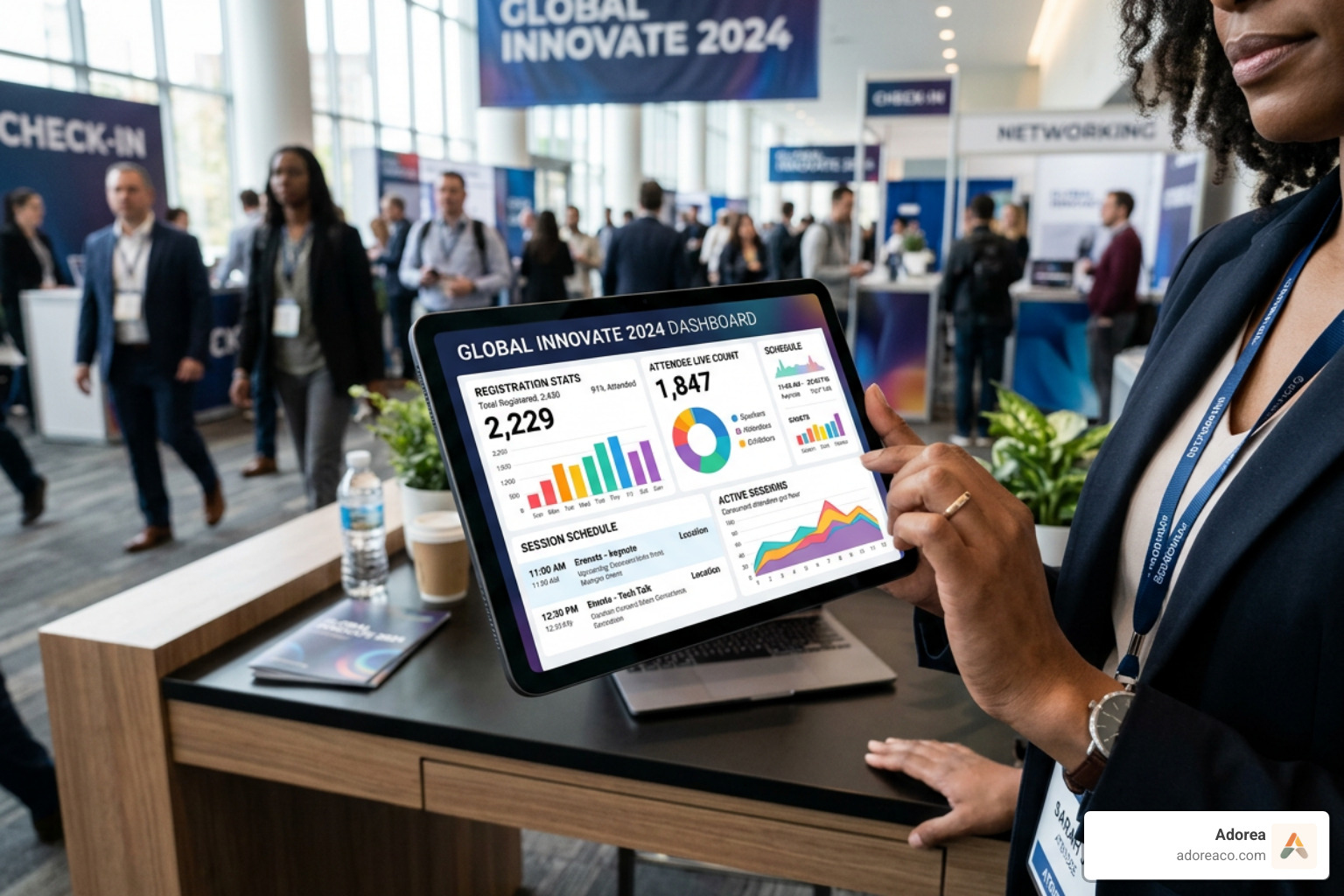
When we look at a modern event organization platform, we aren't just looking at a digital version of a clipboard. We are looking at a high-powered engine designed to handle the heavy lifting of logistics. Imagine having a digital assistant that never sleeps, tracks every dollar, and greets every guest by name.
The most effective platforms today focus on several "pillar" features:
- Seamless Registration and Ticketing: Gone are the days of manual spreadsheets. Modern platforms allow us to build custom registration forms with unlimited questions, ensuring we capture exactly the data we need. Whether it's a free community gathering or a high-ticket corporate summit, 0% commission ticketing models are becoming the gold standard, allowing more revenue to stay with the organizer.
- Rapid QR Check-in: First impressions matter. A dedicated event organization platform provides mobile apps that turn any smartphone into a high-speed scanner. Attendees simply show a QR code, and they are checked in instantly. Some systems even support on-demand name badge printing and self-service kiosks to eliminate lines entirely.
- Attendee Tracking and Engagement: We can now see which sessions are hits and which are misses in real-time. Tools like live polls, Q&A sessions, and AI-powered networking help make attendees "10 times happier" by facilitating meaningful connections.
- Automated Communications: Why send 500 individual emails when you can automate the whole journey? From "Thank you for registering" to "Here is your parking pass," automated triggers ensure no guest feels ignored.
- Lead Capture for Stakeholders: For business events, the platform serves as a bridge. Exhibitors and sponsors can use the same mobile app to scan attendee badges, instantly capturing leads and proving the ROI of their participation.
For teams evaluating digital event tools, the event management field offers a useful overview of how planning, logistics, and guest experience fit together across the full event lifecycle.
To keep the planning process from becoming overwhelming, it is essential to How to Build a Calm Event Timeline. By mapping out milestones within your platform, you ensure that tasks like marketing launches and vendor deadlines don't collide in a last-minute panic.
Customizing Your Event Organization Platform
Your event has a soul, a brand, and a specific "vibe." A generic interface just won't do. Thats why top-tier platforms offer deep customization options.
- White-Labeling and Brand Kits: We can often remove the platform's logo and replace it with our own. This includes choosing specific color palettes, fonts, and uploading brand assets so the event website looks like a natural extension of our business.
- Bespoke Templates: You don't need to be a designer to look professional. Many platforms provide libraries of custom templates that allow you to go live in minutes. You can explore professional templates to see how quickly a landing page can come together.
- Advanced Styling: For those who want total control, look for platforms that allow custom CSS, JavaScript, and HTML. This lets us tweak every button and border to perfection.
- Domain Masking: Instead of a messy URL like
platform-name.com/yourevent, you can host your event on a custom domain (e.g.,yourbrand.com/summit) for a truly premium feel.
If you are planning a celebration that involves many moving parts, like a wedding, timing is everything. Check out our Wedding Vendor Booking Timeline Every Couple Needs to Know to ensure your platform's customization phase aligns with your vendor outreach.
Security and Compliance in an Event Organization Platform
In an era where data is more valuable than gold, security isn't just a "nice-to-have" - it's a requirement. We take data privacy seriously, and so should your platform.
- Encryption and Standards: Top platforms utilize bank-level 256-bit encryption and are built with "security by design." This ensures that attendee data remains private and protected from breaches.
- Privacy Without Trackers: Some modern solutions have moved away from invasive ad trackers. This means your attendees aren't being followed around the internet by ads just because they registered for your event.
- Compliance: Whether it's GDPR for data protection or PCI compliance for secure payment processing, your event organization platform should do the legal heavy lifting for you.
- Data Ownership: A major trend is the shift toward "owning your data." Rather than giving your valuable attendee list to a third-party provider, some platforms allow you to host the infrastructure in your own cloud, giving you total control over who sees what.
Supporting Every Format: In-Person, Virtual, and Hybrid
The world of events has changed. We are no longer limited by four walls. A robust event organization platform must be a shapeshifter, supporting whatever format the situation requires.

- In-Person Excellence: For physical events, the focus is on logistics floor plans, wayfinding, and hardware solutions like cashless terminals.
- Virtual Innovation: Virtual events are more than just "glorified webinars." They require multidimensional spaces, including virtual booths where attendees can "walk" through an expo hall, networking hubs for face-to-face video chats, and on-demand content libraries that live on long after the closing remarks.
- The Hybrid Bridge: Hybrid events are the most complex but offer the greatest reach. They require a platform that can sync a live audience with a remote one. AI matchmaking can suggest connections between a person sitting in a hall in Birmingham, Alabama, and someone watching from their home in Anchorage, Alaska.
- Interactive Mapping: For large venues, indoor mapping with 3D renderings helps attendees navigate complex layouts. This is particularly useful for festivals and trade shows where finding a specific booth can be a challenge.
The All-in-One Advantage: Saving Time and Boosting ROI
Is it better to use five different tools that don't talk to each other, or one platform that does it all? For us, the answer is clear. The "fragmentation tax" the time lost moving data between apps is too high.
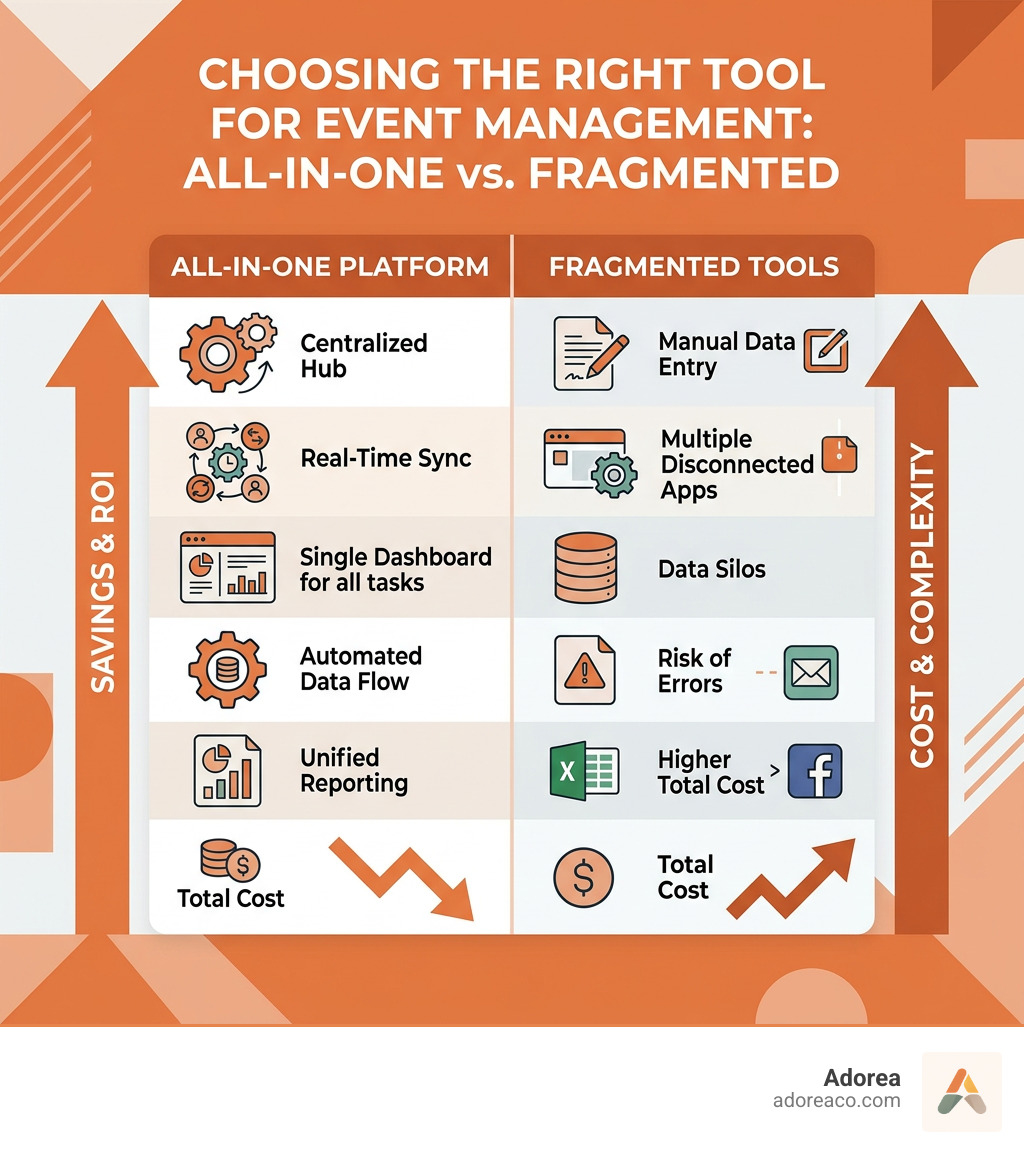
The statistics are hard to ignore. Organizers using all-in-one systems report:
- 200+ Hours Saved: By automating badge generation, registration, and email marketing, planners can reclaim weeks of work.
- 13x ROI: Efficient site planning and better sponsor visibility lead to massive returns, as seen in high-stakes environments like Formula 1 venues.
- Cost Reductions: One town festival reported a $12k reduction in costs simply by streamlining their road event logistics through a single tool.
Centralizing your communication also means you have a "single source of truth." When a speaker changes their session time, it updates on the website, the mobile app, and the digital signage simultaneously.
For those looking to grow their event business, we even offer a Free Vendor Website Builder to help you showcase your services professionally without the overhead.
Specialized Tools for Vendors and Site Planning
For large-scale outdoor events like music festivals or farmers' markets, general event software isn't enough. You need tools that understand the "dirt and grass" reality of site planning.
- To-Scale Site Mapping: Advanced mapping tools allow us to plan on a real map with to-scale accuracy. This means when we place a row of portable toilets or a stage, we know exactly how much space they will take up. This "map-first" approach has helped some festivals save up to 85% of their planning time.
- Booth and Exhibitor Management: Managing 200 vendors is a nightmare in a spreadsheet. Specialized platforms provide exhibitor portals where vendors can apply, pay their fees, and upload their insurance documents (some even offer built-in vendor insurance options).
- Volunteer Tracking: Large events run on volunteer power. Modern platforms allow us to track shifts, assign roles, and communicate with our "street team" all from one dashboard.
Before you commit to a partner, it's wise to review the Questions to Ask Before Booking a Vendor. This ensures that the vendors you bring into your platform are as tech-savvy and reliable as the software you're using to manage them.
Frequently Asked Questions about Event Platforms
How do pricing models typically work?
Pricing is rarely "one-size-fits-all." Most platforms offer:
- Free Tiers: Great for small events or testing the waters (e.g., first 50 objects free for site planning).
- Subscription Plans: Monthly or yearly fees that often include a set number of events or attendees.
- Commission-Based: The platform takes a small percentage of each ticket sold.
- Enterprise Quotes: Custom pricing for large organizations requiring dedicated support and high-level security.
What integrations should I look for?
Your event organization platform should be a team player. Look for:
- CRM Sync: Automatically push attendee data to tools like Salesforce or HubSpot.
- Payment Gateways: Integration with Stripe or PayPal for secure, instant payouts.
- Zapier: This is the "universal remote" that lets your event platform talk to over 5,000 other apps.
- API Access: For those with unique needs, an open API allows your developers to build custom features on top of the platform.
Is there a steep learning curve for new users?
The best modern platforms are "no-code." If you can drag and drop a file or write an email, you can build an event. Most offer:
- Setup Wizards: Step-by-step guides to get your first event live.
- Knowledge Bases: Detailed documentation and video tutorials.
- 24/7 Support: Some platforms pride themselves on a 10-minute response time, ensuring you're never stuck on the eve of your big bash.
Conclusion
At Adorea, we believe that planning an event should be as exciting as the event itself. By using a modern event organization platform, you aren't just buying software; you're buying peace of mind.
We specialize in connecting event planners with a dedicated marketplace of vendors, ensuring that whether you are in Phoenix, Arizona, or Miami, Florida, you have access to the best local talent. Our platform is designed to outfox the chaos, streamline your operations, and support the local businesses that make every event unique.
Ready to transform your planning process? Visit Adorea and see how we can help you create an unforgettable experience, minus the stress. Whether it's a city-wide festival or a corporate retreat, we have the tools to help you plan, promote, and execute with confidence.