Why Every Event Pro Needs a Reliable Wholesale Floral Supplier
Wholesale floral sourcing guide for event pros: where to buy, how to save 30-60%, and how to manage logistics from order to setup.
Why Every Event Pro Needs a Reliable Wholesale Floral Supplier
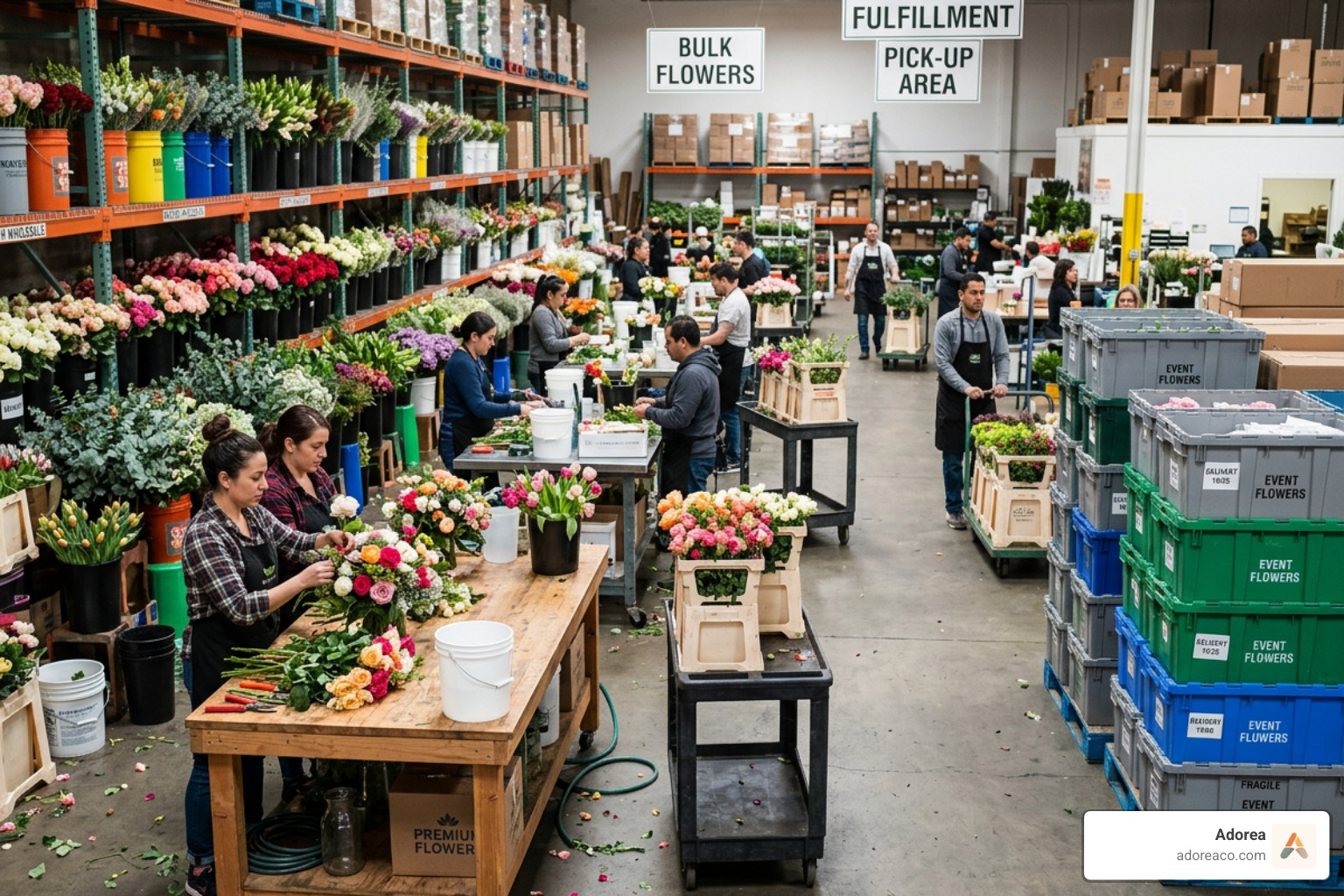
Florist suppliers event planners rely on are the backbone of any well-executed wedding or corporate event yet finding the right ones is one of the most frustrating parts of the job.
Here's a quick answer to what you need to know:
| What You Need | Quick Answer |
|---|---|
| Where to buy wholesale flowers | Suppliers like FiftyFlowers, Schaefer Wholesale, NY Floral Supply, and Hall's Atlanta |
| How much can you save vs. retail | 3060% less than retail prices |
| Do you need a license | Sometimes some suppliers require a resale certificate, others are open to the public |
| Minimum orders | Typically $50$125 depending on the supplier |
| Best flower types for events | Fresh cut blooms, silk alternatives, faux greenery, DIY kits |
Wholesale floral sourcing isn't just a cost-cutting tactic. It's a professional strategy. When you buy direct closer to the grower you get fresher flowers, more variety, and far better margins than walking into a retail shop.
But knowing which suppliers to trust, when to order, and how to manage logistics? That's where most event planners run into trouble.
This checklist-style guide breaks it all down so you can source smarter, spend less, and deliver stunning results every time.
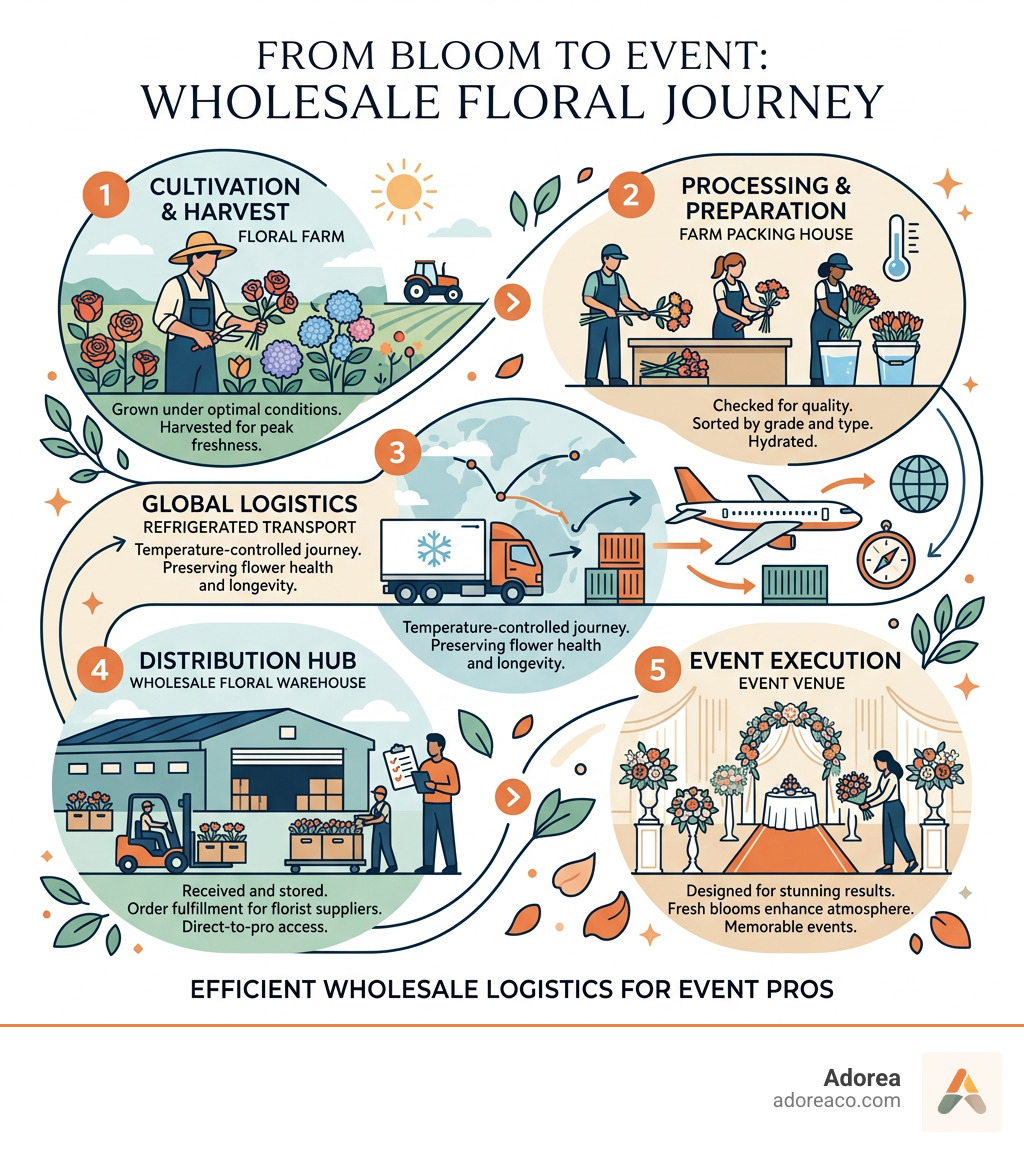
Wholesale vs. Retail: The Strategic Advantage
For many new event planners, the temptation to run to a local retail florist for a last-minute centerpiece is high. However, when we look at the numbers, the "retail convenience" quickly loses its luster. Wholesale floral supplies differ from retail options primarily in their position in the supply chain. Retailers buy from wholesalers, add a significant markup for their labor, storefront overhead, and artistry, and then sell to the public.
When you work with wholesale florist suppliers event planners trust, you are skipping several steps of price inflation. Because wholesalers source directly from farms in places like California, Ecuador, Holland, and Italy, the flowers haven't been sitting in a retail cooler for days. They are fresher, sturdier, and significantly cheaper.
| Feature | Retail Florist | Wholesale Supplier |
|---|---|---|
| Price Point | High (includes labor/markup) | Low (bulk pricing) |
| Savings | 0% | 3060% |
| Selection | Limited to shop stock | Massive (global sourcing) |
| Freshness | 2nd or 3rd hand | Direct from farm/importer |
| Order Volume | By the stem/bouquet | By the bunch/case |
Before you commit to a vendor, it is vital to vet their reliability. We recommend checking out our guide on Questions to Ask Before Booking a Vendor to ensure your floral partner can handle the scale of your event.
How do florist suppliers event planners maximize their budget?
The secret to maximizing a floral budget isn't just finding the lowest price; it's about volume and timing. Wholesale suppliers offer deep discounts when you purchase in bulk. For example, while a dozen roses might cost $30 at a retail shop, a wholesaler might offer them for $12$15 when bought in larger quantities.
Event design firms like Bella Flora maximize budgets by integrating wholesale supplies with their in-house design expertise. By sourcing high-quality blooms at wholesale rates, they can allocate more of the client's budget toward elaborate installations, luxury linens, and custom furniture rentals without sacrificing the "wow" factor of the florals.
Essential Sourcing for Florist Suppliers Event Planners
The world of wholesale isn't limited to just fresh roses. A comprehensive supplier will offer everything from "hard goods" (vases, foam, tape) to specialized greenery and even silk alternatives.

Why florist suppliers event planners prioritize direct shipping?
In the events industry, time is the enemy of freshness. This is why many florist suppliers event planners use, such as FiftyFlowers or Calvert's Wholesale, emphasize direct shipping or farm-to-door models.
- Transit Time: Direct shipping reduces the number of hands a flower touches. Every time a bloom is moved, it risks bruising or dehydration.
- Emergency Orders: Companies like Wedding and Special Event Flowers- Calvert's Wholesale, Inc. specialize in "floral emergencies," offering 24-hour delivery via FedEx or UPS and even grower drop-shipping for those high-stakes wedding orders that need an immediate solution.
- Farm-to-Door: By partnering with over 350 farms worldwide, suppliers can ensure that flowers are hand-selected at their peak moment and shipped immediately to the event site.
To see these beautiful bulk blooms in action and get inspiration for your next mood board, Follow us on Instagram@fiftyflowers.
Integrating Wholesale Supplies into Custom Designs
Successful event planners don't just "buy flowers"; they curate an atmosphere. This involves blending fresh wholesale inventory with other design elements.
- Design Cohesion: Use wholesale greenery (like eucalyptus or ruscus) to create volume in large installations, then "nestle" premium wholesale blooms (like ranunculus or peonies) as focal points.
- Silk and Faux Elements: For high-heat outdoor weddings or ceiling-high flower walls, planners often mix high-quality silk stems with fresh greenery to maintain a lush look without the weight or wilting risk.
- Timeline Management: Logistics are key. If you are processing 500 stems of wholesale flowers, you need time. Check out our tips on How to Build a Calm Event Timeline to ensure you have enough "buffer" for flower hydration and arrangement.
Logistics, Licensing, and Professional Care
Buying wholesale isn't as simple as "add to cart." Most traditional wholesalers operate as B2B (business-to-business) entities.
- Licensing: Many suppliers require a business license or a resale certificate to prove you are an industry professional. This allows you to purchase tax-free if you are reselling the items to a client.
- Minimum Orders: To keep prices low, wholesalers set minimums. For instance, Pioneer Wholesale has a $125 minimum, while other regional markets might set theirs at $50$100.
- Major Hubs: If you are in a major market like New York, Miami, Atlanta, or Las Vegas, you have access to massive physical markets. Halls Atlanta Wholesale Florist, for example, has been a staple in the industry since 1921, offering both a physical warehouse and a floral design school.
Storage and Transportation Best Practices
Once your bulk order arrives, the clock starts ticking. Wholesale flowers often arrive "thirsty" and "sleeping" (in bud form).
- Temperature Control: Flowers should ideally be stored at 3436F with moderate humidity.
- Hydration: Immediately trim stems at a 45-degree angle and place them in clean buckets with floral preservatives. This "shocks" the flower into drinking and blooming.
- Transportation: Use insulated containers or refrigerated vans for transit to the venue. Avoid leaving flowers in a hot car even for a few minutes.
For more deep dives into managing event logistics, visit our More info about event guides page.
Frequently Asked Questions about Wholesale Florals
Do event planners need a business license to buy wholesale?
It depends on the supplier. Traditional "trade-only" wholesalers usually require a resale certificate or proof of business. However, "prosumer" sites like FiftyFlowers are open to the public, though they still offer professional accounts with dedicated perks for frequent event planners.
What are the most common mistakes when buying bulk flowers?
The biggest mistake is ignoring the ordering deadline. Most wholesalers need orders placed by 5:00 PM EST for next-day delivery, and inventory often fluctuates over the weekend. Other common errors include underestimating the time needed for "processing" (trimming and hydrating) and failing to account for seasonal price spikes around holidays like Valentine's Day or Mother's Day.
Which suppliers offer the best silk and faux greenery alternatives?
Pioneer Wholesale is a leader in this space, offering an exclusive "PW" line of silk flowers and faux greenery. These are favored for large-scale installations because they are lightweight, eliminate the need for water, and come in consistent, trend-matching colors that are hard to find in nature.
Conclusion
Mastering the relationship with florist suppliers event planners trust is the difference between a stressed planner and a successful one. By understanding the logistics of wholesale sourcing from licensing and minimum orders to the science of hydration you can elevate your designs while protecting your bottom line.
When looking for your next floral partner, remember these essential criteria:
- Direct Sourcing: Do they ship from the farm or a middleman?
- Reliability: Do they have a track record of handling "floral emergencies"?
- Variety: Do they offer both fresh blooms and "hard goods" like vases?
- Support: Do they offer consultations or design resources?
At Adorea, we are dedicated to helping you build these vital professional connections. Our vendor marketplace is designed to streamline your search and ensure every event you plan is a blooming success.
Find the best event vendors today and start building your dream team.