What Is Budget in Event Management and Why It Matters
A practical guide to event budgeting: fixed vs variable costs, contingency planning, ROI tracking, and spend optimization.
What Is Budget in Event Management and Why It Matters

What is budget in event management is one of the most searched questions by both first-time organizers and seasoned pros and for good reason.
An event budget is a financial plan that outlines all expected costs and revenue for an event. It gives you a clear picture of where money is going, helps you make smarter decisions, and keeps your event from turning into a financial disaster.
Here's a quick breakdown of what an event budget typically covers:
- Revenue sources ticket sales, sponsorships, exhibitor fees, merchandise
- Fixed costs venue rental, permits, insurance, speaker fees
- Variable costs catering per head, printed materials, staffing by shift
- Contingency fund 1015% of total budget set aside for surprises
The stakes are real. Two-thirds of event planners say costs are rising, and the average internal meeting now costs $554 per attendee per day. At the same time, 80% of event creators planned to cut budgets in 2023 while still being expected to deliver great experiences.
Whether you're planning a wedding, a corporate conference, or a community fundraiser, a solid budget isn't just a spreadsheet. It's the difference between an event that runs smoothly and one that bleeds money.
This guide walks you through everything from building your first budget to tracking every dollar and squeezing more ROI out of every line item.
Understanding What is Budget in Event Management
At its core, understanding what is budget in event management means recognizing it as your event's "financial North Star." It isn't just a list of prices; it is a dynamic document that evolves from the first brainstorm to the final invoice. According to research from Knowland, 46.3% of hospitality event organizers cite rising costs as their single biggest obstacle. Without a budget, you aren't just planning an event; you're gambling with your resources.
A well-constructed budget serves three primary functions:
- Expense Control: It prevents the "shiny object syndrome" where planners overspend on non-essentials.
- Stakeholder Confidence: Whether you are reporting to a corporate board or a couple planning their wedding, a detailed budget proves you are a responsible steward of their funds.
- Maximizing return on investment (ROI): By identifying where every dollar goes, you can ensure that your spending aligns with the event's ultimate goals.
Defining What is Budget in Event Management Goals
Before you type a single number into a spreadsheet, you must define your financial objectives. Are you looking to turn a profit, or is this a "break-even" brand awareness exercise? We recommend using SMART goals (Specific, Measurable, Achievable, Relevant, and Time-bound) to anchor your spending.
Your budget should also reflect your USP (Unique Selling Proposition). If your events main draw is high-end networking, your budget should prioritize premium catering and a comfortable venue over, say, expensive branded swag. For personal events, timing is everything; consult a Wedding Vendor Booking Timeline Every Couple Needs to Know to ensure you aren't hit with "rush fees" that blow your budget before the invitations are even sent.
Tracking What is Budget in Event Management Performance
A budget is only useful if its accurate. Real-time monitoring is the secret sauce of successful event pros. You should constantly perform a "variance analysis"comparing what you thought youd spend versus what you actually spent.
To get a true sense of whether your spending is hitting the mark, you can conduct a survey on social platforms or via email to see if attendees actually value the high-cost items youve included. Often, there is a disconnect between what planners think is important and what guests enjoy. Understanding The Gap Between Event Planners and Vendors and How to Close It helps ensure that your tracking accounts for hidden costs like service charges or delivery fees that vendors might not highlight in initial chats.
Core Components and Categories of Event Costs
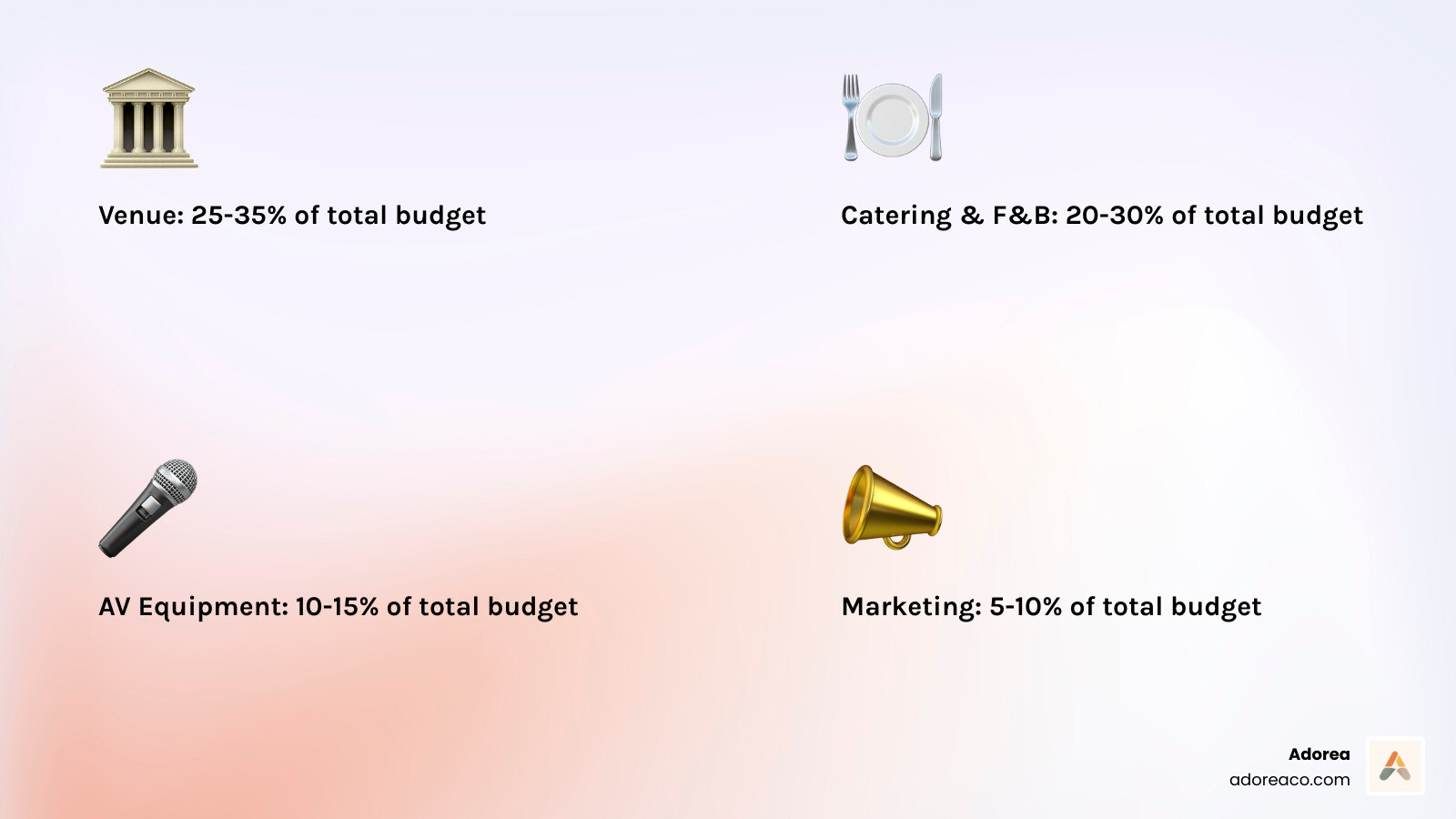
When we look at what is budget in event management from a structural perspective, costs generally fall into several non-negotiable buckets.
| Cost Category | Typical % of Budget | Key Elements |
|---|---|---|
| Venue & Catering | 40% - 50% | Room hire, F&B minimums, service staff |
| Marketing & Promotion | 10% - 20% | Ads, PR, social media, signage |
| Talent & Entertainment | 10% - 15% | Speakers, DJs, travel, riders |
| Technology & AV | 5% - 10% | WiFi, streaming, lighting, sound |
| Staffing & Admin | 5% - 10% | Security, event day staff, insurance |
According to PCMA CONVENE, food and beverage alone can account for 33% of your total spend. Don't forget that in many jurisdictions, you'll need to factor in Goods and Services Tax (GST) or local sales taxes, which can add a surprising 5% to 10% to your final bill if not accounted for early on.
Fixed vs Variable Costs and Real-World Examples
Understanding the difference between fixed and variable costs is the hallmark of a pro.
- Fixed Costs: These stay the same regardless of how many people show up. Examples include venue rental, speaker fees, and insurance. Even if only ten people attend your 500-person gala, the venue bill remains the same.
- Variable Costs: These fluctuate based on your guest count. Catering is the biggest onemore guests equals more plates. Similarly, Why Every Event Pro Needs a Reliable Wholesale Floral Supplier is a vital consideration because decor needs often scale with the number of tables or the size of the room.
Common Sources of Revenue and Sponsorships
If your event needs to pay for itself, you need a diverse event marketing strategy. Don't just rely on ticket sales. Consider:
- Tiered Sponsorships: Offer different levels of visibility (Gold, Silver, Bronze).
- Exhibitor Fees: Charging companies to set up booths.
- Digital Revenue: Using Google Ads to drive traffic to a paid webinar or selling digital recordings post-event.
- Merchandise: Branded apparel or "add-on" experiences like VIP meet-and-greets.
Step-by-Step Process for Creating an Effective Event Budget
Creating a budget shouldn't feel like a chore. Follow this sequence to keep your sanity intact:
- Start with the Big-Picture Cap: How much total can you spend?
- Break Down the Costs: Use the percentages mentioned above to create rough buckets.
- Get Real Quotes: Don't guess. Reach out to vendors early. How to Build a Calm Event Timeline suggests starting this process months in advance to avoid "scarcity pricing."
- Final Approval: Get the "sign-off" from stakeholders before committing to any deposits.

Building a Contingency Fund for Unexpected Expenses
In events, if something can go wrong, it eventually will. Whether it's a sudden storm for an outdoor wedding or a speaker canceling 24 hours before a keynote, you need a safety net.
We recommend a 10-15% contingency fund. This isn't "extra" money to spend on fancy flowers; it's a dedicated buffer to handle decreasing budgets or price hikes. If you don't use it, you've just increased your profit margin at the end!
How to Track and Update Your Budget During Execution
A budget is a living document. We suggest weekly updates where you log every invoice and payment. Before you sign any contract, ensure you know the Questions to Ask Before Booking a Vendor, such as their policy on overtime or hidden "clean-up" fees.
Be aware that Why Getting Vendor Quotes for Events is Harder Than It Should Be is a common frustrationvendors often have tiered pricing or seasonal shifts. Always get quotes in writing and update your "Actual Cost" column the moment a contract is signed.
Strategies for Optimizing Spend and ROI
With the 2023 Global Meetings and Events Forecast indicating that costs will continue to rise, optimization is key. You don't always have to cut quality to save money.
- Tiered F&B Minimums: Instead of fighting a hotel's high minimum spend, negotiate for more "value-adds" like free WiFi or suite upgrades if you hit a higher spending tier.
- Multi-year Contracts: If you run an annual event, booking a venue for three years at once can freeze today's prices.
- Date Flexibility: Hosting a corporate event on a Tuesday instead of a Thursday can save you thousands in venue hire.
Leveraging Historical Data and Negotiation Tactics
The best predictor of future costs is your past data. Look at previous events to see where you over-ordered food or where the AV labor hours spiraled out of control.
- Negotiation Pro-Tip: Always bundle services. If one vendor can handle your lighting, sound, and staging, they are much more likely to give you a "package discount."
- Track Everything: Monitor attendee feedback to see if that $5,000 photo booth was actually a hit or if people preferred the $500 acoustic guitarist.
Recommended Tools, Templates, and ROI Calculation
While a simple spreadsheet works for small parties, larger events benefit from specialized software. Tools like Monday.com or dedicated event platforms can automate your tracking and prevent manual entry errors.
To measure success, use the standard ROI formula: ROI = [(Total Revenue - Total Cost) / Total Cost] x 100
For non-revenue events (like internal meetings), measure "Return on Objective" (ROO) by tracking attendee engagement, lead generation, or employee morale scores.
Conclusion
Mastering what is budget in event management is about more than just math; its about control, creativity, and confidence. By categorizing your costs, building a solid contingency, and leveraging the right tools, you can deliver an incredible experience without the financial hangover.
At Adorea, we believe that the best way to stay on budget is to find the right partners from the start. Our event planning and vendor marketplace platform is designed to bridge the gap between vision and execution. Our USP is simple: Connecting event planners with vendors in a dedicated marketplace. Whether you are in Phoenix, Miami, or Chicago, we help you find the pros who fit your budget and your style.
Plan your next event with Adorea and take the guesswork out of your event finances.